Doorbell Chimes Buying Guide (2026): What Matters and 8 Picks
As an Amazon Associate we earn from qualifying purchases. Links on this page are affiliate links.
This doorbell chime buying guide helps you select the right alert system for your home or business. You will learn how to evaluate connectivity options, sound volume, and installation requirements before making a choice. The guide walks you through key decisions, such as choosing between wired and wireless models or deciding on sensor count. We analyzed 8 products strictly by their published specifications to ensure an objective comparison. You can see exactly how each device performs based on data like range, tone variety, and power source. This approach removes guesswork from your purchase. After reading, you will be able to decide which chime fits your specific wiring setup and monitoring needs. The recommended products were chosen from their published specifications, focusing on practical performance metrics. You will understand what each spec means for your daily use, from decibel levels to wireless range. This clarity ensures you pick a device that matches your technical requirements without relying on marketing claims. The goal is to help you find a reliable solution based on hard data.
Our top pick: Arlo Chime 2 Wi-Fi Smart Doorbell Chime.
Key Factors for Choosing a Chime
Power source and wiring
Your chime needs a reliable power source to function. Wired mechanical models like the Newhouse Hardware CHM1 connect directly to your home’s 16V doorbell transformer. This setup provides consistent power without battery changes but requires existing compatible wiring. Wireless options, such as the Arlo Chime 2, plug into standard wall outlets. This removes the need for low-voltage wiring but occupies an outlet. Battery-powered sensors pair with plug-in receivers. Choose wired if you want maintenance-free operation and have the wiring. Choose plug-in or battery if you lack low-voltage circuits or want flexible placement. The trade-off is convenience versus installation complexity.
- Existing 16V transformer availability
- Nearby wall outlet access
- Battery replacement frequency
Connectivity type
Connectivity determines how the sensor talks to the chime. Wireless models use radio frequencies to send signals. The SanJie and SECRUI units use wireless connections for easy setup. You do not need to run wires between the door and the chime. Smart Wi-Fi chimes, like the Arlo Chime 2, connect to your home network. This allows remote alerts via an app. Wired mechanical chimes rely on physical circuits. They do not need internet or radio signals. Wi-Fi offers remote monitoring but depends on your router. Wireless offers simplicity but may have interference. Wired offers reliability but limits placement. Select based on your need for remote access versus setup ease.
- Wi-Fi signal strength at location
- Radio frequency interference sources
- Physical wire installation feasibility
Operating range
The operating range defines how far the sensor can send a signal. The Satisure chime offers a 600-foot range, suitable for large properties or detached buildings. Most wireless models, including the METAK and AMHEY, provide a 500-foot range. This covers most standard homes and small businesses. Walls, metal structures, and distance can reduce this range in practice. If your door is far from where you keep the chime, prioritize a higher range rating. A 500-foot range is sufficient for most two-story homes. For larger lots, verify the specific range of the sensor unit. Ensure the receiver is within this effective distance for reliable alerts.
- Distance from door to chime
- Obstacles between sensor and receiver
- Maximum stated range in feet
Sensor and receiver count
Consider how many doors or entries you need to monitor. Single sensor kits, like the SECRUI M508, work for one entry point. Multi-sensor kits, such as the SanJie with two sensors or the METAK with three sensors, allow you to track multiple doors. Some kits include multiple receivers, like the METAK’s two receivers, for placing alerts in different rooms. Adding extra sensors is often possible with expandable systems. If you have a side door, back door, or garage, choose a kit that supports those inputs. Buying a kit with spare sensors can be more cost-effective than adding them later. Match the kit size to your current and future monitoring needs.
- Number of entries to monitor
- Expandability for extra sensors
- Number of included receivers
Sound volume and tones
Audibility and tone variety help you identify alerts. Wired mechanical chimes, like the Heath Zenith 18000088, offer classic mechanical tones. The Newhouse Hardware model provides an 85dB sound, which is loud enough for most homes. Wireless chimes often offer multiple tone selections. The SECRUI and METAK models include 58 tone options. This lets you customize the sound to your preference. Volume levels vary. Ensure the chime is loud enough to hear in your intended room. Some models allow volume adjustment. Consider if you need a siren for security, like the Arlo Chime 2, or just a pleasant chime. Match the sound profile to your household’s hearing needs.
- Decibel rating for loudness
- Number of available tones
- Volume adjustment capabilities
Trigger type
The trigger type determines how the chime activates. Most chimes use a door contact sensor, which detects when a door opens. The SECRUI and SanJie models use this standard method. Some units, like the AMHEY chime, use a motion sensor. This triggers when movement is detected near the doorway, even if the door stays closed. This is useful for windows or areas where contact sensors are hard to install. Choose contact sensors for standard door monitoring. Choose motion sensors for passive detection or when wiring a contact is impractical. Each type has specific installation requirements. Ensure the trigger type matches your entry point’s configuration.
- Door contact vs motion detection
- Sensor placement flexibility
- False trigger prevention features
Main Types of Doorbell Chimes
Wi-Fi Smart Chimes
Wi-Fi chimes connect directly to your network without a hub. The Arlo Chime 2 plugs into a wall outlet and alerts you for compatible Arlo cameras. It includes an 80-plus decibel siren for clear audio. This type suits existing Arlo owners who want seamless integration. You get direct app alerts. The trade-off is reliance on Wi-Fi stability and brand compatibility. If your network drops, alerts may delay. It is best for users already in a specific smart home ecosystem.
Wireless Door Sensors
Wireless sensors use radio frequencies to trigger a receiver when a door opens. Models like SECRUI and SanJie offer ranges up to 500 or 600 feet. They include multiple tone selections and mute options. These kits often include one receiver and one or more sensors. You can monitor multiple entrances in large homes or storefronts. Installation is simple with no wiring required. The main trade-off is battery maintenance for the sensors. You must replace batteries periodically to ensure reliable transmission across the stated range.
Motion Sensor Chimes
Motion sensor chimes detect activity rather than physical door contact. The AMHEY model uses wide-angle motion detection with a 500-foot range. It includes visual LED notifications alongside audio alerts. This type is useful for gates, patios, or areas where door contacts are impractical. You get passive entry warnings without touching the device. The trade-off is potential false triggers from wind or pets. You need to adjust sensitivity to avoid nuisance alerts. It suits users who want broad coverage for open entryways.
Wired Mechanical Chimes
Wired mechanical chimes connect directly to your home’s 16V transformer. Models like Newhouse Hardware and Heath Zenith provide consistent power without batteries. They offer distinct tones or melodies for different zones. You get reliable, loud signaling that works independently of Wi-Fi. This type is ideal for replacing buzzing smart doorbell chimes. The trade-off is installation complexity. You must wire the unit into existing doorbell circuits. It is best for traditional setups where you prefer simple, durable hardware over smart features.
Avoid These Doorbell Chime Mistakes
Ignoring voltage requirements for wired models
Many wired chimes require specific voltage ranges to function correctly. Connecting a device to an incompatible transformer can cause failure or damage. Check your home’s transformer output before purchasing. Match the chime’s input specifications to your existing wiring to ensure reliable operation and prevent electrical issues.
Placing chimes far from the camera
Wi-Fi chimes need a strong signal from your router or the camera hub. Distance and walls can weaken this connection, leading to missed alerts. Place the chime within a few rooms of the main network source. Ensure there are minimal obstructions between the device and your Wi-Fi access point.
Assuming all chimes work with any doorbell
Not every chime is compatible with every video doorbell or smart lock system. Proprietary ecosystems often restrict which devices can trigger alerts. Verify that your chosen chime supports the specific brand and model of your doorbell camera. Mismatched systems will not sync, leaving you without audible notifications at the door.
Overlooking sound volume limitations
Standard chimes may be too quiet for large homes or noisy environments. Check the decibel rating of the device before buying. Higher volume settings ensure you hear the alert from another room or outside. If your home is large, prioritize models with adjustable volume controls or louder default outputs.
Forgetting to check battery backup options
Power outages can disable wired chimes if they lack backup power. Some models include internal batteries to maintain alerts during brief interruptions. Consider this feature if you live in an area with frequent power fluctuations. A battery-backed chime ensures you still receive notifications when the main power supply fails.
Quick picks
Our 8 picks

Arlo Chime 2 Wi-Fi Smart Doorbell Chime
Best for: Arlo doorbell and security camera owners
- Maximum Volume
- 80 plus decibel
- Receiver Power Source
- Outlet
- Connectivity
- Wi-Fi
- Color
- White
- Dimensions
- 1.22 × 1.76 × 3.6 inches
- Weight
- 3.14 ounces
The Arlo Chime 2 is a compact plug-in Wi-Fi chime designed for Arlo doorbells and surveillance cameras. You plug it directly into a standard wall outlet without requiring a separate base station. Key specifications include Wi-Fi connectivity, an 80-plus decibel siren for motion or manual alerts, and selectable melodies with volume control and silent mode. This unit suits you if you need indoor audio alerts across your existing Arlo smart home hardware.
Pros
- Plugs directly into an outlet without requiring a base station
- Includes an 80-plus decibel siren triggered manually or by motion
- Supports adjustable volume, customizable melodies, and silent mode
- Connects directly via Wi-Fi for Arlo camera and doorbell alerts
Cons
- Works exclusively with compatible Arlo doorbells and cameras
- Requires a wall outlet and Wi-Fi connection to operate
Good fit if
- You already own compatible Arlo doorbells or Arlo surveillance cameras.
- You want a plug-in chime with an integrated 80-plus decibel siren.
- You need customizable melodies and a silent mode option.
Skip if
- You do not use compatible Arlo video doorbells or security cameras.
- You need a traditional wired mechanical chime setup.
Verdict: Arlo Chime 2 Wi-Fi Smart Doorbell Chime provides direct Wi-Fi alerts and a built-in 80-plus decibel siren for your compatible Arlo cameras and doorbells. It plugs directly into a wall outlet without needing an external hub.
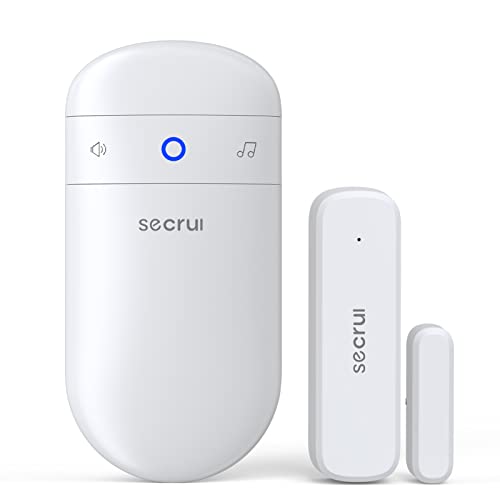
SECRUI Wireless Door Chime with Open Sensor
Best for: Automated door opening and entry tracking
- Connectivity
- Wireless
- Operating Range
- 500FT
- Maximum Volume
- 110 dB
- Melody Count
- 58
- Volume Levels
- 5
- Receiver Count
- 1 Receiver
This SECRUI system notifies you whenever a monitored door opens. It pairs a wireless contact sensor with a receiver across a 500-foot operating range. You can configure 58 chimes and select from five volume settings spanning 0 to 110 dB, backed by a visual LED alert. It suits you if you need automatic entry alerts for homes or retail spaces without complex wiring.
Pros
- 58 chime options with 5 volume levels from 0 to 110 dB
- 500-foot wireless transmission range
- LED visual alert triggers even at 0 dB mute
- Pre-paired receiver and contact sensor out of the box
Cons
- Includes an open contact sensor rather than a pushbutton doorbell
- 500-foot wireless range limits placement across larger commercial properties
Good fit if
- You want alerts triggered automatically when a door opens.
- You need a silent visual LED alert option with mute at 0 dB.
- You want an expandable system with pre-paired parts out of the box.
Skip if
- You need a standard pushbutton for visitors to ring.
- You require a wireless range greater than 500 feet.
Verdict: SECRUI Wireless Door Open Chime with Sensor delivers automatic entry notifications across 500 feet with 58 tone selections and mute capabilities. It is a solid, wire-free contact alert setup for monitoring active doors in homes or storefronts.

SanJie Wireless Door Chime with 2 Sensors
Best for: monitoring multiple entrances across homes or shops
- Connectivity
- Wireless
- Operating Range
- 500feets
- Maximum Volume
- 110dB
- Melody Count
- 26
- Trigger Type
- Magnetic sensor
- Receiver Power Source
- Plug-in
This wireless contact chime system includes one plug-in receiver and two pre-paired magnetic entry sensors. It features a 500-foot wireless range, 26 selectable tones, and five volume settings ranging from mute up to 110 decibels. You can assign individual chimes to each door and add unlimited additional sensors. It suits your needs if you monitor entry points in a home or retail shop without running hardwired electrical lines.
Pros
- Includes 26 selectable chimes with volume levels from mute to 110 dB
- Supports pairing individual ringtones to each entry sensor
- Wireless signal range reaches up to 500 feet
- Receiver memory function preserves chime settings after unplugging
Cons
- Requires an open standard wall outlet for the receiver
- Sensors use adhesive tape rather than screw-mounted hardware
Good fit if
- You want distinct chime tones for separate doors or windows.
- You need loud audio alerts up to 110 dB or an LED-only mute option.
- You plan to expand your system with additional magnetic contact sensors.
Skip if
- You need a hardwired mechanical chime setup.
- You do not have a free standard electrical outlet near your listening area.
Verdict: SanJie Wireless Door Chime with 2 Sensors delivers practical multi-door tracking with distinct ringtones and an alert range reaching 500 feet. The pre-paired design makes adding entry alerts fast and straightforward.
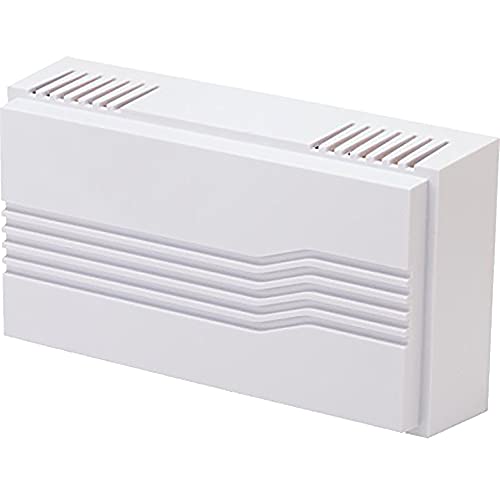
Newhouse Hardware Wired Mechanical Doorbell Chime
Best for: traditional wired dual-entry doorbell installations
- Connectivity
- wired
- Maximum Volume
- 85dB
- Trigger Type
- push button
- Receiver Power Source
- 16V/10VA or 16V/30VA transformer
- Color
- White
- Dimensions
- 7.2 × 4 × 2 inches
View on Amazon: Newhouse Hardware Wired Mechanical Doorbell Chime
This Newhouse Hardware unit is a wired mechanical doorbell chime housed in a white enclosure measuring 7.2 by 4 by 2 inches. It delivers an 85dB sound level, playing a two-note ding-dong for your front door and a single ding for a secondary entrance. It suits you if you need a standard wired sounder for new construction or want to replace an existing mechanical unit with a dual-door setup.
Pros
- Delivers 85dB sound output
- Provides distinct tones for front (two-note) and rear or side (one-note) entrances
- Includes mounting screws inside the cover
- Works with standard 16V/10VA or 16V/30VA transformers
Cons
- Requires bell wire, push buttons, and a transformer sold separately
- Does not support wireless or battery-powered operation
- Limited to fixed mechanical chimes with no alternative melodies
Good fit if
- You have existing low-voltage bell wiring or are roughing in a new build.
- You want two distinct acoustic signals to identify which door is ringing.
- You need a simple mechanical chime compatible with 16V doorbell transformers.
Skip if
- You want a wire-free, battery-powered, or plug-in chime.
- You prefer customizable electronic melodies, adjustable volume, or siren alerts.
- You do not want to source transformers, wiring, and buttons separately.
Verdict: Newhouse Hardware 2-Note Wired Mechanical Door Chime provides straightforward 85dB wired sound signaling for up to two entrances. It is a dependable mechanical choice if your home has compatible 16V wiring.
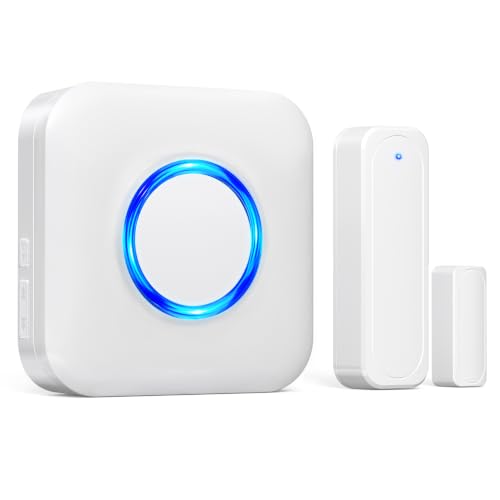
Satisure Wireless Door Chime and Sensor
Best for: monitoring entry doors across large spaces
- Connectivity
- Wireless
- Operating Range
- 600 ft
- Maximum Volume
- 110 dB
- Melody Count
- 58
- Trigger Type
- Magnetic contact sensor
- Receiver Power Source
- Plug-in
This wireless system pairs an outlet receiver with a magnetic door contact sensor. It gives you a 600-foot operating range, 58 chime melodies, and five volume settings from 0 to 110 decibels. The unit includes a silent LED flash mode and saves settings during power outages. It suits you if you want instant entry alerts for home security, retail monitoring, or elder safety without running wires.
Pros
- 600-foot wireless transmission range
- 5 volume levels from 0 dB to 110 dB plus silent LED flash
- 58 selectable chime melodies with memory backup
- Expandable up to 58 sensors or receivers
Cons
- Requires an open wall outlet for the plug-in receiver
- Uses an adhesive contact sensor instead of an exterior push button
Good fit if
- You need an alert whenever a door or window opens.
- You want to assign specific tones to distinct entry points.
- You want an expandable system supporting up to 58 components.
Skip if
- You need a traditional exterior push-button doorbell for visitors.
- You prefer a hardwired chime system that does not occupy a wall outlet.
Verdict: Satisure Wireless Door Sensor Chime delivers wide 600-foot wireless coverage and expansive 58-unit expandability for door-open alerts. It provides a simple plug-in solution for monitoring entryways without running electrical wiring.

METAK Wireless Door Chime (3 Sensors, 2 Receivers)
Best for: multi-entry monitoring across multiple rooms
- Connectivity
- Wireless
- Operating Range
- 500 ft
- Maximum Volume
- 120 dB
- Melody Count
- 58
- Trigger Type
- Contact sensor
- Receiver Power Source
- Plug-in
View on Amazon: METAK Wireless Door Chime (3 Sensors, 2 Receivers)
You get three wireless contact sensors and two plug-in receivers operating up to 500 feet. The system provides 58 alert tones and five volume levels reaching up to 120 dB, including a mute option. Sensors use standard AAA batteries lasting one to two years, while receivers plug into wall outlets. This kit suits you if you need to monitor multiple entry points, doors, or windows across separate rooms in a home or business.
Pros
- 500-foot wireless operating range
- 58 chime tones with 5 volume settings up to 120 dB and mute
- Includes 3 contact sensors and 2 plug-in receivers pre-paired
- Sensors use standard AAA batteries with 1 to 2 years battery life
Cons
- Receivers require standard AC wall outlets
- Contact sensors require occasional AAA battery replacements
Good fit if
- You need to monitor up to three separate doors, gates, or windows.
- You want alert sounds in two separate rooms simultaneously.
- You require alert volumes up to 120 dB or a mute setting.
Skip if
- You need battery-operated receivers for locations without wall outlets.
- You want a hardwired mechanical chime setup.
Verdict: METAK Wireless Door Chime (3 Sensors, 2 Receivers) delivers multi-room coverage with 58 tones and high volume capability. It is a practical wireless kit for tracking multiple entrances across a 500-foot range.

Heath Zenith Wired Mechanical Doorbell Chime
Best for: replacing buzzing smart doorbell chimes
- Connectivity
- wired
- Maximum Volume
- 85dB
- Melody Count
- 2
- Trigger Type
- wired doorbell button
- Receiver Power Source
- 16VAC-10VA low-voltage transformer
- Color
- White
View on Amazon: Heath Zenith Wired Mechanical Doorbell Chime
This wired mechanical chime offers two tones: a classic ding-dong and a single ding. It outputs 85dB of sound, which covers most single-family homes. The unit works with smart video doorbells from Ring, Nest, and others. It replaces buzzing chimes caused by smart doorbell power draw. You can wire two buttons independently to distinguish entry points. The slim white housing fits standard mounting locations.
Pros
- Produces an authentic mechanical ding-dong or single ding tone
- 85dB output audible throughout most single-family homes
- Compatible with Ring, Nest, Skybell, Wyze, and Blink systems
- Allows independent wiring for front and back doors
- Slim 2 x 7.2 x 4 in. white plastic profile
Cons
- Only offers two melody options
- Requires a separate 16VAC-10VA transformer and bell wire
- Lacks customizable digital sound settings
Good fit if
- You want a reliable replacement for a buzzing smart doorbell chime
- You need to distinguish between front and back door entries
- You prefer a classic mechanical sound over digital tones
Skip if
- You need more than two melody choices
- You want wireless installation without existing wiring
- You require smart app control for volume or tone
Verdict: Heath Zenith 2-Melody Wired Mechanical Chime is a practical solution for users who need a sturdy, wired chime that works with smart doorbells. It suits those who value clear, mechanical tones and independent zone wiring.

AMHEY Wireless Motion Sensor Door Chime
Best for: hands-free doorway motion alerts
- Connectivity
- wireless
- Operating Range
- 500 ft
- Maximum Volume
- 110 dB
- Melody Count
- 32
- Trigger Type
- motion sensor
- Receiver Power Source
- plug-in
This setup pairs a plug-in receiver with a battery-powered motion sensor instead of a standard pushbutton or contact sensor. You get a 500-foot wireless range, motion detection up to 26 feet across a 110-degree angle, and 32 chime options. With volume scaling from silent up to 110 dB plus an LED alert, it suits you if you need hands-free alerts across an open doorway without mounting hardware directly to the door frame.
Pros
- Motion detector scans 16 to 26 feet at a 110-degree angle
- Wireless signal reaches up to 500 feet between sensor and plug-in receiver
- Offers 32 selectable chimes and volume levels from 0 to 110 dB
- Flashing LED indicator delivers visual alerts alongside audio
- System expands up to 20 sensors and unlimited receivers
Cons
- Sensor requires periodic AAA battery replacements
- Lacks a physical doorbell push button or magnetic contact hardware
- Specified for indoor use only
Good fit if
- You need motion-triggered alerts rather than a physical door push or contact
- You want visual flashing LED alerts paired with adjustable 0 to 110 dB volume
- You plan to expand coverage across multiple zones using up to 20 sensors
Skip if
- You prefer a traditional push-button doorbell or magnetic door-frame sensor
- You need a fully hardwired or battery-free chime setup
Verdict: AMHEY Wireless Motion Sensor Door Chime delivers wide-angle motion detection with a 500-foot transmission range and visual LED notifications. It serves as a practical, expandable solution when you need passive entry warnings without physical door contacts.
Specifications side by side
| Spec | Arlo Chime 2 Wi-Fi Smart Doorbell Chime | SECRUI Wireless Door Chime with Open Sensor | SanJie Wireless Door Chime with 2 Sensors | Newhouse Hardware Wired Mechanical Doorbell Chime | Satisure Wireless Door Chime and Sensor | METAK Wireless Door Chime (3 Sensors, 2 Receivers) | Heath Zenith Wired Mechanical Doorbell Chime | AMHEY Wireless Motion Sensor Door Chime |
|---|---|---|---|---|---|---|---|---|
| Connectivity | not specified | Wireless | Wireless | wired | Wireless | Wireless | wired | wireless |
| Operating Range | not specified | 500FT | 500feets | not specified | 600 ft | 500 ft | not specified | 500 ft |
| Maximum Volume | 80 plus decibel | 110 dB | 110dB | 85dB | 110 dB | 120 dB | 85dB | 110 dB |
| Melody Count | not specified | 58 | 26 | not specified | 58 | 58 | 2 | 32 |
| Trigger Type | not specified | not specified | Magnetic sensor | push button | Magnetic contact sensor | Contact sensor | wired doorbell button | motion sensor |
| Receiver Power Source | Outlet | not specified | Plug-in | 16V/10VA or 16V/30VA transformer | Plug-in | Plug-in | 16VAC-10VA low-voltage transformer | plug-in |
| Volume Levels | not specified | 5 | 5 | not specified | 5 | 5 | not specified | 5 |
| Power Source | not specified | not specified | not specified | Wired | not specified | Plug-In | Wired | not specified |
| Receiver Count | not specified | 1 Receiver | 1 Receiver | not specified | not specified | 2 Receivers | not specified | not specified |
| Color | White | White | White | White | White | Black | White | motion sensor doorbell |
| Application | not specified | Home | Home | not specified | Home | Home, Office | not specified | not specified |
| Intended Use | not specified | Business | Business | not specified | Business, Store | Business, Store | not specified | Business |
| Dimensions | 1.22 × 1.76 × 3.6 inches | 4.5 × 2.3 × 1.7 inches | 4 × 3 × 2 inches | 7.2 × 4 × 2 inches | 3.15 × 3.15 × 3.15 inches | not specified | 2 × 4.5 × 2.7 inches | 5.51 × 4.21 × 2.13 inches |
| Weight | 3.14 ounces | not specified | 7 ounces | 14.1 ounces | not specified | 10.1 ounces | 13.4 ounces | 5.93 ounces |
| Size | not specified | 1 Receiver+1 Sensor | 2 Sensors + 1 Receiver White | 1 Pack | 1 Door Chime-1 Door Sensor | 3 Sensors + 2 Receivers | No Size | 1 Rreceiver 1 Sensor |
| Model | not specified | M508+D017 | 2 Sensors +1 Receiver | CHM1 | MC | DC_M520x2+D015x3-B | 18000088 | DW520+P827 |
If you also need physical protection specs for outdoor hardware, the cover buying guide lists enclosure dimensions and materials.
Frequently asked questions
Can I use a wireless door chime without running new wires?
Yes, wireless models like the Satisure and SECRUI units plug directly into standard wall outlets. They communicate with sensors via radio signals, eliminating the need for electrical wiring. This makes them ideal for rentals or homes where installing new wires is difficult or costly.
How far away can a wireless door chime signal reach?
Most wireless chimes offer a range between 500 and 600 feet. The Satisure model provides 600 feet of coverage, while the SECRUI and SanJie units reach 500 feet. This distance allows you to place the receiver in distant rooms or offices without signal loss.
What is the difference between a wired and Wi-Fi chime?
Wired chimes, like the Newhouse Hardware CHM1, connect directly to your home’s 16V transformer for consistent power. Wi-Fi chimes, such as the Arlo Chime 2, connect to your network and require a wall outlet. Wi-Fi models often integrate with smart cameras, while wired ones are purely mechanical.
Can I monitor multiple doors with one chime system?
Yes, many systems support multiple sensors. The METAK kit includes two receivers and three sensors for multi-room coverage. The SanJie model comes with two sensors and one receiver. You can assign distinct ringtones to different entrances to identify which door was opened.
Do I need a hub for a smart doorbell chime?
No, the Arlo Chime 2 connects directly to your Wi-Fi network without an external hub. It plugs into a wall outlet and alerts you for compatible Arlo cameras. This direct connection simplifies setup compared to systems that require a separate bridge device.
How loud are these doorbell chimes?
Sound levels vary by model. The Newhouse Hardware CHM1 produces an 85dB mechanical signal. The Arlo Chime 2 features an 80-plus decibel siren. Most wireless models offer 58 tone selections with adjustable volume to suit different noise environments in your home or business.
Can I use a chime for motion detection instead of door contact?
Yes, the AMHEY model uses a wireless motion sensor trigger. It detects movement within a wide angle and sends an alert to the receiver. This option is useful for hands-free entry warnings where physical door contacts are not practical or desired.