KAMEP vs Roku: Video Doorbells Compared by Specs
As an Amazon Associate we earn from qualifying purchases. Links on this page are affiliate links.
Choosing between the KAMEP and Roku video doorbells depends on your home’s power setup. This KAMEP vs roku video doorbell comparison highlights key differences in power, resolution, and storage. Both units offer two-way audio and smart home integration. The main distinction lies in how they receive power and store footage. One relies on a rechargeable battery, while the other uses existing doorbell wiring. We compare their specs to help you decide which fits your needs.
Key differences
| Aspect | KAMEP Wireless 2K Video Doorbell | Roku Wired Video Doorbell & Chime |
|---|---|---|
| Power Source | Rechargeable battery | Wired |
| Video Resolution | 2K | 1080p HD |
| Field of View | 180° | 120° vertical, 88° horizontal |
| Storage Type | Cloud (free basic) or TF card | Cloud subscription |
| Night Vision | Infrared | Color night vision |
| Wi-Fi Connectivity | 2.4 GHz | Not listed |
Which one should you choose?
Choose KAMEP Wireless 2K Video Doorbell if
- You want a battery-powered doorbell that avoids wiring work.
- You prefer higher 2K resolution and a wider 180° field of view.
- You want local storage options via a TF card without mandatory subscriptions.
Choose Roku Wired Video Doorbell & Chime if
- You have existing doorbell wiring and prefer a hardwired power source.
- You want color night vision for better detail in low light.
- You are already using the Roku Smart Home app for other devices.
Verdict: The KAMEP is better for renters or those without wiring, offering higher resolution and flexible storage. The Roku is ideal for homeowners with existing doorbell power who want color night vision. Your choice depends on whether you prioritize installation ease or video clarity in the dark.
KAMEP vs Roku Doorbell Specs
Power source
The KAMEP Wireless 2K Video Doorbell runs on a rechargeable battery, offering flexibility for renters or homes without existing doorbell wiring. It lasts two to three months per charge and alerts you at 20% battery. In contrast, the Roku Wired Video Doorbell & Chime connects directly to your home’s existing doorbell wiring. This wired power source eliminates the need for recharging, ensuring continuous operation without battery anxiety. You must have compatible low-voltage wiring to install the Roku unit. If you lack wiring or prefer not to drill, the KAMEP battery option is the practical choice. For permanent, maintenance-free power, the Roku wired connection is superior.
Video resolution
Resolution determines how clearly you can identify faces or read license plates. The KAMEP doorbell captures 2K FHD video, providing higher pixel density than standard 1080p. This extra clarity helps in zooming in on details without significant loss of quality. The Roku doorbell records in 1080p HD, which is the standard for most video doorbells. While 1080p is sufficient for most users, the KAMEP’s 2K sensor offers a sharper image. If you live on a busy street or need to verify small details from a distance, the higher resolution of the KAMEP provides a tangible benefit. For typical porch monitoring, both resolutions are adequate, but KAMEP wins on raw spec.
Field of view
The viewing angle affects how much of your porch you can see without blind spots. The KAMEP doorbell features a 180-degree ultra-wide lens, designed to capture a head-to-toe view of visitors. This wide angle ensures you see packages placed on the ground and the full height of a person. The Roku doorbell offers a 120-degree vertical and 88-degree horizontal view. While this is a standard ultrawide view, it is narrower than the KAMEP’s 180-degree coverage. The KAMEP’s wider field of view reduces blind spots at the edges of your porch. If you want to maximize the visible area from a single camera, the KAMEP’s 180-degree lens is the better specification.
Night vision
Night vision technology impacts visibility in low-light conditions. The KAMEP doorbell uses infrared night vision with a 33-foot range, providing clear black-and-white footage in darkness. The Roku doorbell features color night vision, aided by a low-light amplifier that captures twice as much light as standard sensors. Color night vision allows you to see clothing colors and vehicle details that infrared misses. This is a significant advantage if you need to identify specific items or people in dim lighting. The Roku’s color capability offers more information than the KAMEP’s monochrome infrared. For detailed identification at night, the Roku’s color night vision is the superior spec.
Storage type
Storage options determine how you keep video records and whether you pay monthly fees. The KAMEP doorbell supports local storage via a 128GB TF card (not included) and offers free basic cloud storage with a seven-day loop. You can avoid subscription fees entirely by using the local card. The Roku doorbell relies on cloud subscription storage. You receive three months free with a plan, but continued use requires a monthly fee. There is no local storage option listed for the Roku. If you want to avoid recurring costs and control your own data, the KAMEP’s local and free cloud options are more flexible. The Roku model ties you to a subscription model for long-term use.
Smart home compatibility
Both doorbells integrate with major smart home ecosystems, allowing voice control and automation. The KAMEP doorbell is compatible with Alexa and Google Assistant. You can view live feeds using voice commands like “Show me the front door.” The Roku doorbell also supports Alexa and Google Assistant, providing similar voice control capabilities. Since both products offer the same level of integration with these two platforms, there is no technical difference in their smart home connectivity. You can use either device with your existing Alexa or Google Home setup without limitation. Neither product offers exclusive compatibility with a different platform that would sway your decision based on smart home needs.
Which Video Doorbell Fits Your Home Best
Renters or homes without doorbell wiring
The KAMEP unit uses a rechargeable battery, so you do not need existing doorbell wiring. It lasts two to three months per charge and sends an alert at 20% battery. The included indoor chime lets you hear visitors immediately. This setup avoids drilling holes or hiring an electrician for installation.
Users wanting wide head-to-toe video coverage
KAMEP offers a 180-degree field of view, capturing visitors from head to toe. This wide angle ensures you see packages or full bodies without missing details. The 2K resolution provides clear images for identifying faces or license plates. Roku only provides a 120-degree vertical view, which may cut off lower details.
Buyers preferring color night vision
The Roku doorbell features color night vision using a low-light amplifier. This technology captures twice as much light, helping you see colors in the dark. KAMEP relies on standard infrared night vision, which produces black-and-white footage. If seeing colors at night matters to you, the Roku spec is the better choice.
Users who want continuous power without charging
Roku connects directly to your existing doorbell wiring for continuous power. You never need to worry about battery levels or recharging. KAMEP requires manual recharging every two to three months. If you prefer a set-and-forget solution with reliable power, the wired Roku model fits your needs better than the battery-operated KAMEP.
The products compared
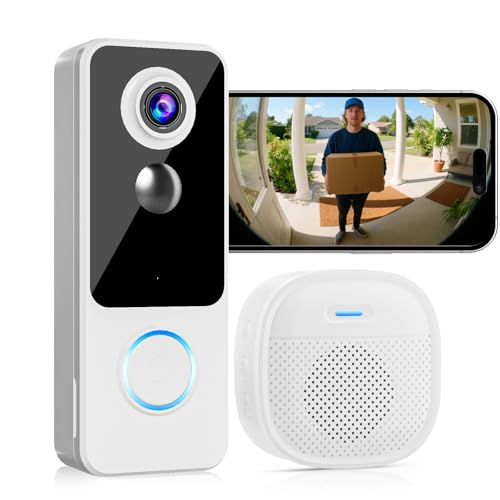
KAMEP Wireless 2K Video Doorbell
Best for: Full-body visibility and included chime
- Video Resolution
- 2K
- Power Source
- Rechargeable battery
- Field of View
- 180°
- Storage Type
- Cloud, TF card up to 128GB
- Night Vision
- Infrared
- Connectivity
- 2.4 GHz Wi-Fi
View on Amazon: KAMEP Wireless 2K Video Doorbell Affiliate link
The KAMEP Bell J9N delivers 2K FHD video with a 180-degree field of view, capturing full-body details from head to toe. It features a rechargeable battery, infrared night vision, and includes a white indoor chime. You get two-way talk and smart human detection without mandatory subscriptions. It supports Alexa and Google Assistant via 2.4 GHz Wi-Fi. This model suits those prioritizing wide-angle coverage and included accessories.
Pros
- 180-degree ultra-wide field of view for full-body visibility
- 2K FHD resolution for clear facial and package details
- Includes white indoor chime for immediate setup
- No mandatory subscription fees with cloud or TF card storage
Cons
- Supports only 2.4 GHz Wi-Fi, not 5 GHz
- TF card not included for local storage
- Battery requires recharging every 2-3 months
Good fit if
- You need to see visitors' feet and packages on the porch
- You want an included indoor chime to avoid extra purchases
- You prefer avoiding monthly subscription fees for cloud storage
Skip if
- You require 5 GHz Wi-Fi connectivity for faster data
- You want local storage included with the device
- You need a hardwired power source for continuous operation
Verdict: The KAMEP Bell J9N 2K Wireless Doorbell offers a wide 180-degree view and includes an indoor chime, making it ideal for renters or homeowners who want full-body visibility without monthly fees.

Roku Wired Video Doorbell & Chime
Best for: homes with existing doorbell wiring
- Video Resolution
- 1080p HD
- Power Source
- Wired
- Field of View
- 120° vertical, 88° horizontal
- Storage Type
- Cloud subscription
- Night Vision
- Color night vision
- Indoor Receiver
- Chime
View on Amazon: Roku Wired Video Doorbell & Chime Affiliate link
The Roku Smart Home Wired Video Doorbell uses your existing doorbell wiring for power. It records 1080p HD video with a 120-degree vertical and 88-degree horizontal field of view. Color night vision helps you see details in the dark. You control the feed and motion zones via the Roku Smart Home app. It includes a wired chime for indoor alerts. This setup suits homes with existing doorbell infrastructure.
Pros
- 1080p HD video resolution
- Color night vision with low-light amplifier
- 120-degree vertical field of view
- Wired power source uses existing wiring
- Includes wired indoor chime
Cons
- Requires cloud subscription for video storage
- No battery backup for power outages
- Limited to 88-degree horizontal view
Good fit if
- You have existing doorbell wiring
- You want color night vision
- You prefer wired power over batteries
Skip if
- You need local storage without a subscription
- You want a wireless battery-powered unit
- You need a wider horizontal view than 88 degrees
Verdict: The Roku Wired Video Doorbell offers reliable 1080p HD video and color night vision for homes with existing wiring. It fits buyers who want a wired setup with app control and an included chime.
Specifications side by side
| Spec | KAMEP Wireless 2K Video Doorbell | Roku Wired Video Doorbell & Chime |
|---|---|---|
| Video Resolution | 2K | 1080p HD |
| Power Source | Rechargeable battery | Wired |
| Field of View | 180° | 120° vertical, 88° horizontal |
| Storage Type | Cloud, TF card up to 128GB | Cloud subscription |
| Night Vision | Infrared | Color night vision |
| Connectivity | 2.4 GHz Wi-Fi | not stated |
| Indoor Receiver | White indoor chime | Chime |
| Resolution | 2K | 1080p |
| Smart Home Compatibility | Alexa, Google Assistant | Alexa, Google Assistant |
| Color | White | White |
| Application | Home | Home |
| Dimensions | 2.17 × 1.3 × 5.71 inches | 0.6 × 1.5 × 3.3 inches |
| Weight | not stated | 9.6 ounces |
| Model | Bell J9N | DS10005 |
| Size | not stated | Pack of 1 |
Frequently asked questions
Does the KAMEP doorbell include an indoor chime?
Yes, the KAMEP Wireless 2K Video Doorbell comes with an indoor chime. This feature allows you to hear visitors without relying solely on phone notifications. It is particularly useful for renters or homeowners who want immediate audio feedback inside the house.
Is the Roku doorbell battery powered or wired?
The Roku Wired Video Doorbell requires a connection to existing doorbell wiring. It does not run on batteries. This makes it suitable for homes that already have the necessary electrical setup for a traditional doorbell system, ensuring consistent power without manual charging.
Which doorbell has a wider field of view?
The KAMEP Bell J9N offers a 180-degree viewing angle. This wide perspective captures full-body visibility of visitors standing at your door. The Roku model provides 1080p HD video but does not specify an ultra-wide angle in its published specifications.
Can I use these doorbells with Alexa or Google Assistant?
Both the KAMEP and Roku doorbells support integration with Alexa and Google Assistant. You can use voice commands to view the feed on compatible displays or get alerts through your smart home ecosystem. This compatibility works for both battery and wired models.
Does the Roku doorbell have night vision?
Yes, the Roku Wired Video Doorbell includes night vision capabilities. It features color night vision to help you identify visitors in low-light conditions. This ensures clear visibility even when ambient light is limited, complementing its standard 1080p resolution during the day.
What is the size of the KAMEP doorbell?
The KAMEP Bell J9N measures 5.71 inches in height, 2.17 inches in length, and 1.3 inches in width. Its white casing fits standard mounting setups. These dimensions allow it to blend into most exterior door frames without being overly bulky.
How does the KAMEP doorbell handle low battery?
The KAMEP unit sends an alert when the battery level drops to 20%. It runs on a rechargeable battery that typically lasts two to three months per charge. This notification system helps you plan recharging before the device powers off completely.
Is the Roku doorbell suitable for renters?
The Roku Wired Video Doorbell is designed for homes with existing doorbell wiring. Renters must check if their unit has this electrical infrastructure before choosing this model. If wiring is absent, the battery-powered KAMEP option may be a more flexible alternative.